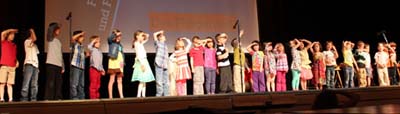
Our Students
The students attending our classes are:
  • Children (from preschool through high school) and
  • Adults
of any nationality, race or religion who wish to learn German for academic, professional, social or cultural reasons.

Knowledge of German Children are individually placed in appropriate classes based on their age and German language skills. Adults may choose from introductory, intermediate, advanced and literature classes.

German_Immanual_school_126lighter

Adult Classes
The Immanuel German Language School offers three adult language classes.
OVERVIEW: Level I:  Beginner Instructor:  Ochirbat Boldbaatar Course Objectives: Basic conversational, grammatical and reading skills will be developed. Included will be an overview of German cultural topics. Special emphasis will be placed on speaking and listening comprehension skills. Students will actively participate in a variety of developmentally directed oral/aural exercises geared toward basic conversational competence. Correct pronunciation will be stressed. Suggested Book used: Dieter Sevin and Ingrid Sevin., Wie Geht's? (8th edition)

Level II:  Intermediate Instructor: Michael Kida Course Objectives: Systematic review of selected features of German grammar and study of structrues which tend to present problems to persons learning German as adults. Grammar study is supplemented with cultural topics and video tapes. This class setting provides an opportunity to practice, maintain and improve German grammar skills and existing fluency. Suggested Book used: Kaleidoskop Materials are provided each class meeting.  

Conversational German Instructor:  Edward McKenney Course Objectives:  This course is designed to improve students' oral proficiency in German by reading a variety of texts and watching videos.  Emphasis is also placed on the cultures of Germany, Austria and Switzerland.  

COURSE DESCRIPTIONS: German Beginner  is a beginning language course for non-native speakers who have no previous knowledge of the German language. The course is designed to introduce students to language skills such as comprehension, listening, speaking, reading and writing and to prepare students to become conversationally proficient. Students will build language competency by producing and by linking learned material. Students will be able to converse on familiar topics and write simple sentences on the topics presented in the text. Written exercises are geared to reinforce the oral exercises. In addition, the course will increase awareness of cultural and social differences and characteristics within the US and Germany. Learning Goals: After completing the course successfully, students will be able to demonstrate course competence in the following language skills: 

  • Giving and responding to basic, polite requests in everyday situations;
  • Introducing themselves and colleagues in social settings;
  • Reading a menu and ordering meals and drinks;
  • Utilizing numbers for simple mathematical functions;
  • Asking and telling the time of the day and the times of various events;
  • Expressing dates: days of the week, months and years, holidays;
  • Reading and interpreting a plane, train, or subway schedule;
  • Making travel and banking arrangements;
  • Giving directions;
  • Conversing about cultural differences in regard to everyday life and living accommodations;
  • Talking about events in the past;
Grammar: Through practice of the above tasks, students will be introduced to the following elements of structure:
  • The German alphabet and pronunciation
  • Question words: was, wer, wie, wo, woher, wohin
  • Gender of nouns
  • Cases: Nominative, Genitive, Dative, Akkusative
  • Prepositions (Akkusative, Dative, Two-way Prepositions)
  • Sentence Structure
  • Negation and placement of “nicht”
  • Imperative
  • Present Perfect; Separable-prefix verbs
  • Modal verbs
  • Flavoring particles
  • Der- and ein words
  • Sentence Structure  

German Intermediate is a continuation course of German Beginner II. The course is designed to  expand the students’ knowledge of the basic skills and to help students become more accurate and fluent when applying their skills. Students will continue to build language competency by producing and by linking learned material. Students will be able to converse on topics such as hobbies, school systems etc. and to write more complex sentences related to the material presented. Students will also engage in writing exercises that meet practical needs. In addition, the course will place emphasis on awareness of cultural and social differences and characteristics within the US and Germany.
Learning Goals: After completing the course successfully, students will be able to demonstrate course competence in the following language skills: 
  • Speaking and writing about future and past events
  • Discussing current events
  • Analyzing texts (i.e. fairy tales, poems etc.)
  • Writing letters
  • Discussing popular culture (i.e. movies, magazines, newspapers)
  • Presenting opinions on various social topics (i.e. gender relations, guest workers)
  • Expressing desires
Grammar:  Through practice of the above tasks, students will be introduced to the following elements of structure:
  • Endings of preceded  and unpreceded adjectives
  • Reflexive verbs
  • Infinitives with zu
  • Verbs with prepositional objects
  • Da- and wo-compounds
  • Simple past
  • Conjunctions: als, wenn, wann
  • Comparison of adjectives and adverbs
  • Future Tense
  • Predicate and adjectival nouns
  • Subjunctive
  • Relative clauses
  • Indirect Speech
  • Passive Voice